Luxury Watch Water Resistance Guide: 30M, 50M, 100M & 200M Explained
This luxury watch water resistance guide explains what common ratings mean, whether a watch can be worn while swimming, how pressure testing works and what buyers should verify before exposing a watch to water.
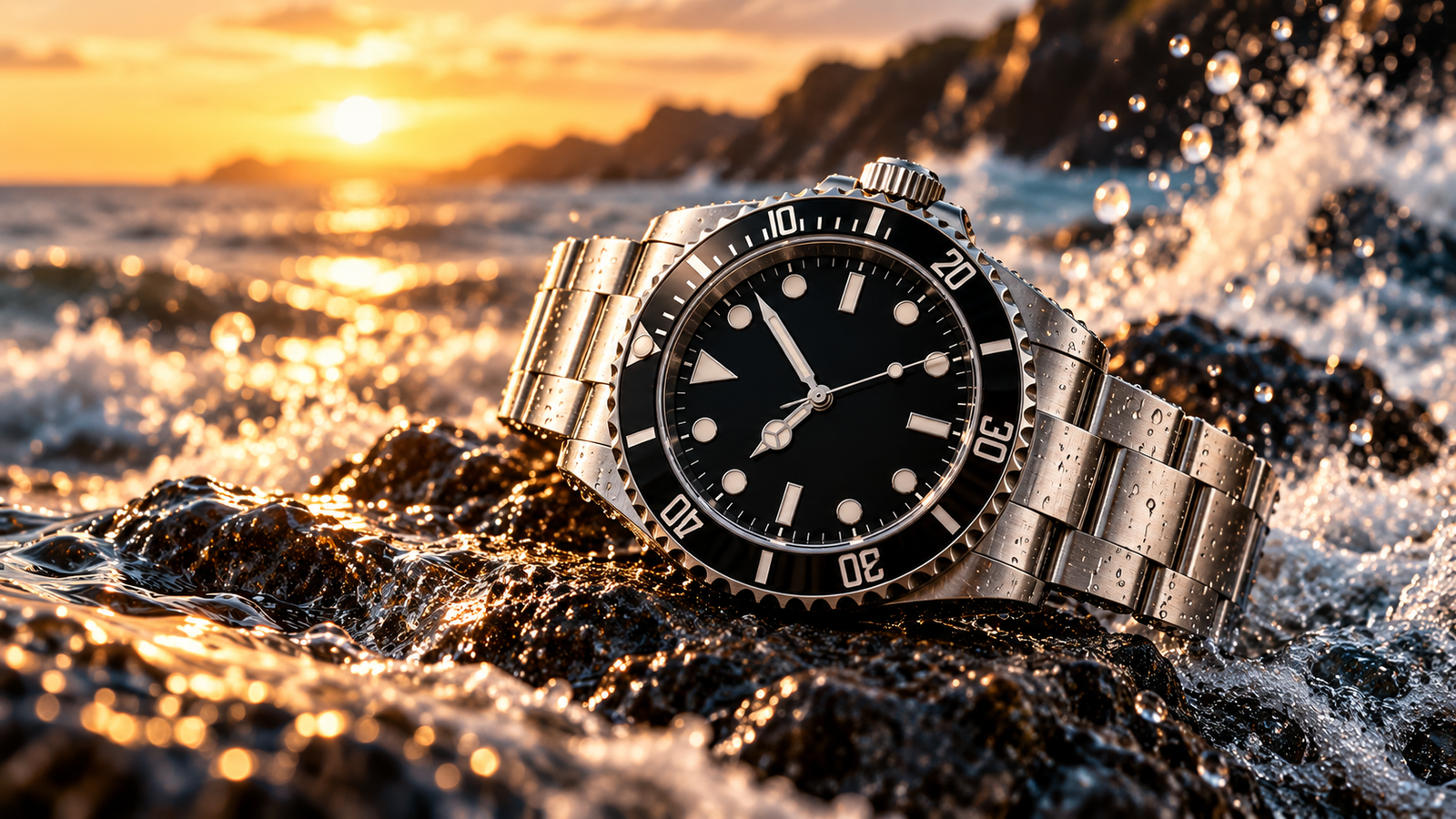
Water Resistance Is Not Just a Number on the Dial
A 30M, 50M, 100M or 200M water-resistance marking describes a nominal pressure level under defined conditions. It is not an automatic promise that a watch is safe for every activity at that depth. Actual suitability depends on the manufacturer’s guidance, verified testing, the watch’s condition and its service history.
1. What Does Water Resistance Mean on a Luxury Watch?
Water resistance describes the ability of a watch case to resist water entry under specified test conditions. It is commonly expressed in metres, bar or atmospheres (ATM).
A 100M marking corresponds to a nominal pressure level of approximately 10 bar. However, the practical activities permitted for any particular watch depend on the manufacturer’s instructions and the results of appropriate testing.
The international standard ISO 22810:2010 — Water-resistant Watches establishes requirements and test methods for water-resistant watches.
Diving watches have additional requirements, so a watch that looks like a dive watch should not automatically be treated as suitable for scuba diving.
This luxury watch water resistance guide focuses on how buyers can interpret ratings and distinguish verified specifications from marketing claims.
2. Luxury Watch Water Resistance Guide: 30M vs 50M vs 100M vs 200M
The most common water-resistance ratings represent different nominal pressure levels. The higher the rating, the greater the specified pressure resistance under the relevant test conditions.
However, a higher marking does not automatically prove that an individual watch is currently in good condition or appropriate for underwater use.
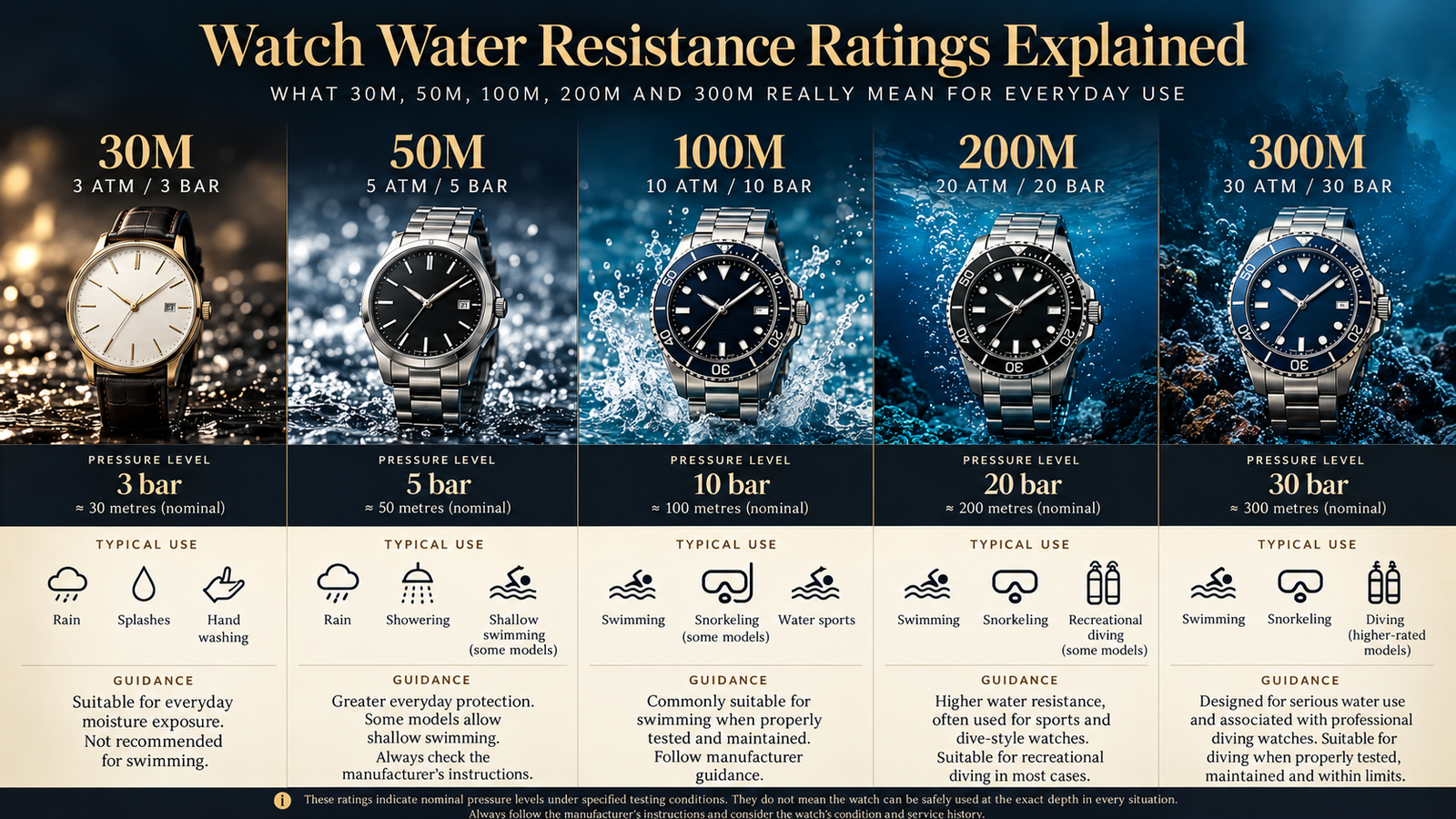
| Rating | Pressure | Typical Meaning | Buyer Guidance |
|---|---|---|---|
| 30M / 3 ATM | 3 bar | Limited everyday moisture exposure on watches intended for that use. | Do not assume suitability for swimming. |
| 50M / 5 ATM | 5 bar | Increased everyday resistance. Some manufacturers allow shallow swimming. | Check specific instructions. |
| 100M / 10 ATM | 10 bar | Commonly appropriate for swimming on tested, well-maintained models. | Confirm the approved activity. |
| 200M / 20 ATM | 20 bar | Higher water resistance found on many sports and dive-style watches. | Do not assume scuba certification. |
| 300M / 30 ATM | 30 bar | Higher-rated watches often associated with specialist designs. | Verify diving standards and model-specific testing. |
These are general educational descriptions. Check each watch manufacturer’s documentation for intended use.
Does 30M Mean You Can Dive 30 Metres?
No. A 30M marking should not be interpreted as a general invitation to dive 30 metres below the surface.
It is commonly associated with limited water exposure, such as splashes or rain, depending on the specific watch.
Can You Swim With a 50M Watch?
This depends on the manufacturer and the model.
Some companies permit shallow swimming with properly tested 50M watches. Others provide more restrictive guidance.
For example, the Casio official water-resistance guide explains how its water-resistance classifications relate to different types of use.
3. Which Water Resistance Rating Should You Choose?
Not everyone needs the highest rating. The correct choice depends on how the watch will be worn.
Daily Use
An everyday watch should offer moisture protection appropriate to normal daily activities. Follow the model’s specified limits.
Swimming
Choose a watch whose manufacturer explicitly approves swimming. Tested 100M models are common choices.
Diving
Use a purpose-designed diving watch with appropriate testing and manufacturer approval.
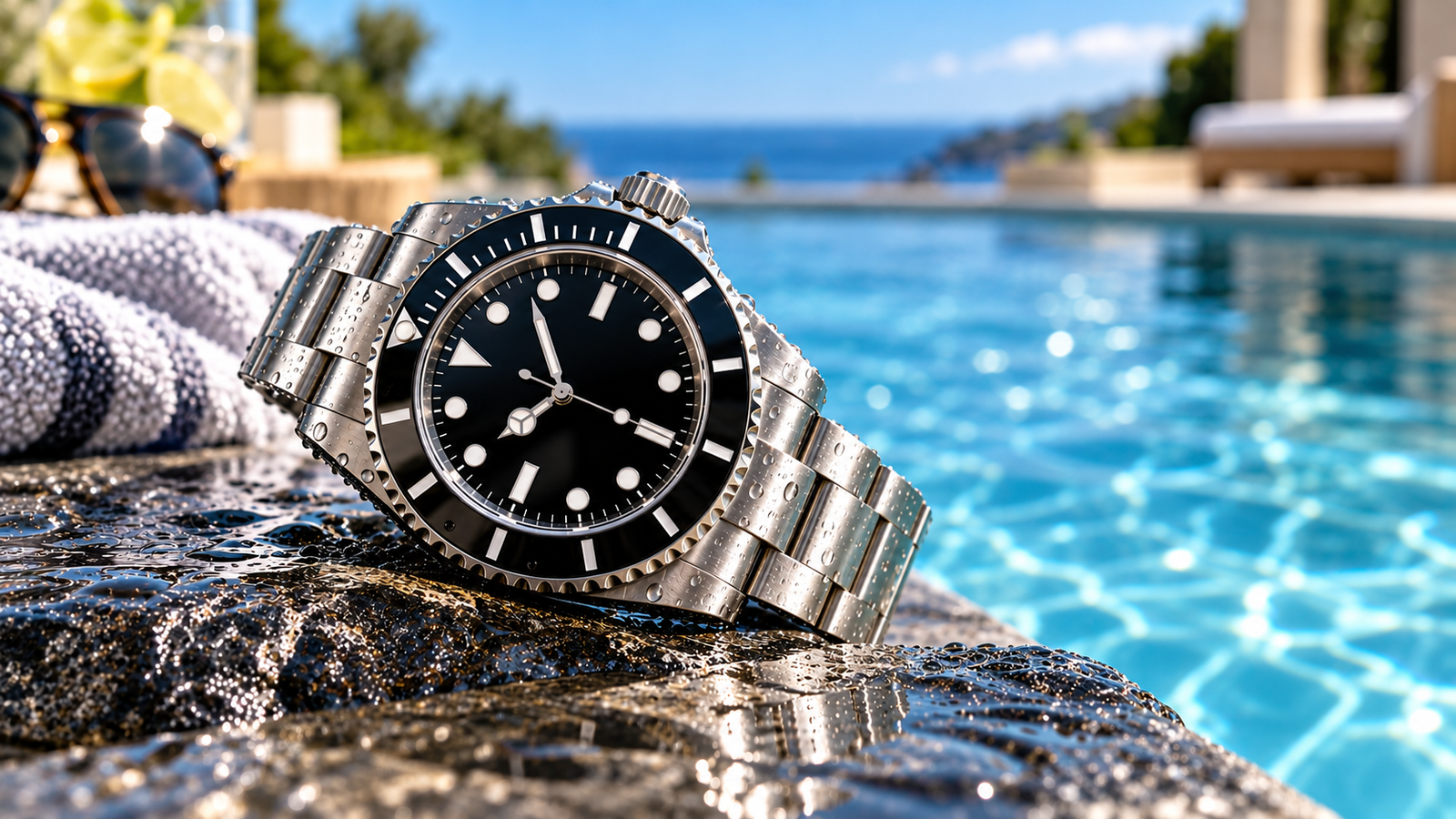
Is 100M Water Resistance Enough for Swimming?
A properly tested and maintained 100M watch is commonly suitable for swimming when the manufacturer permits that activity.
But water resistance can change over time. Impacts, worn gaskets and repairs can affect the condition of the case seals.
If you plan to swim regularly, prioritize documented testing and clear instructions over an attractive appearance alone.
When choosing a watch for everyday comfort, also consider size, thickness and wrist fit. Our Luxury Watch Size Guide explains these factors in detail.
4. What Makes a Watch Water-Resistant?
Water resistance depends on more than the outer case. Several components help protect the movement from water.
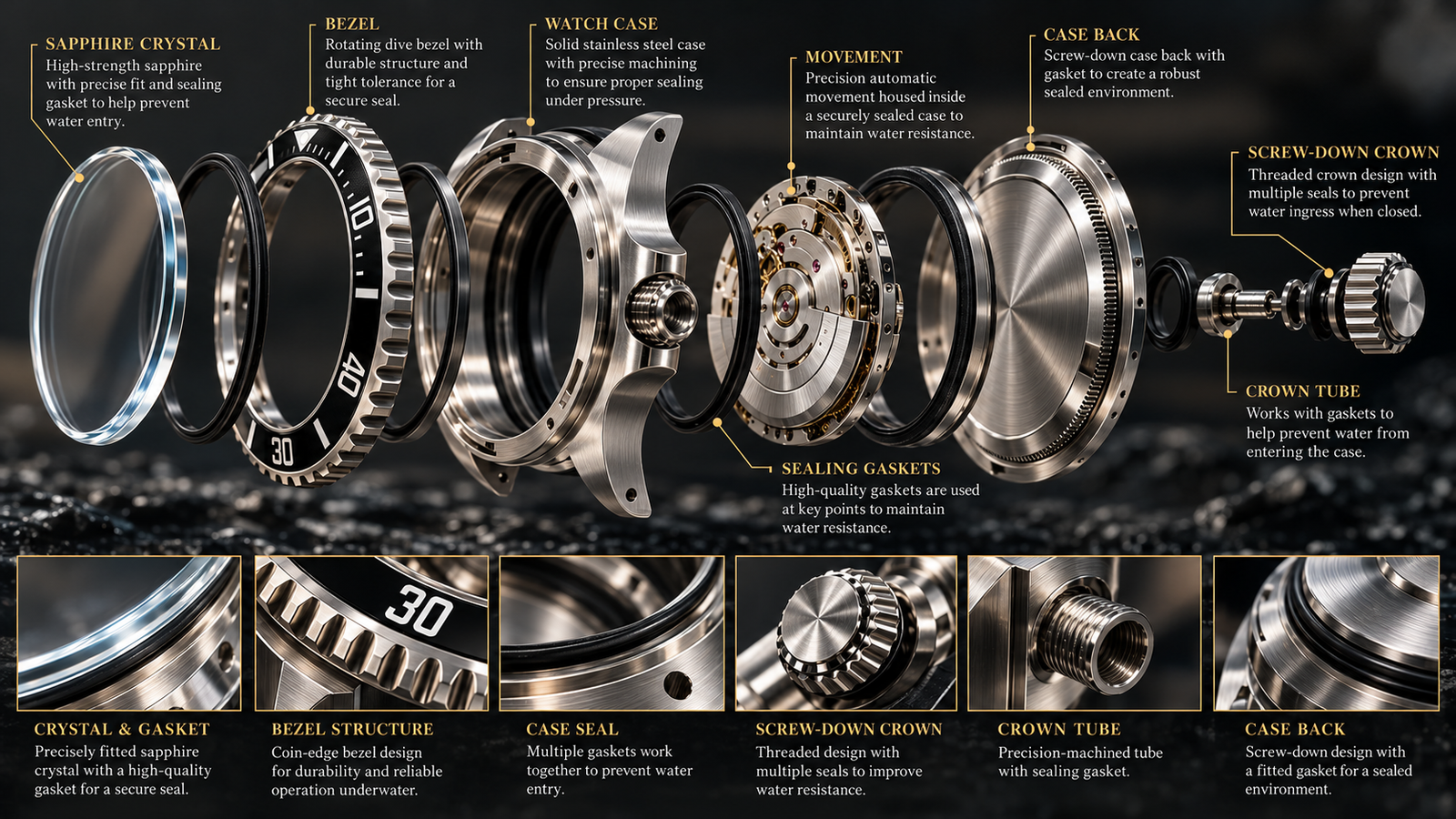
Watch Case and Crystal
The case provides the primary enclosure around the movement. The crystal must also be correctly fitted and sealed.
Crown and Crown Tube
The crown is a critical point because it allows the wearer to wind or adjust the movement. Proper construction and seals help resist water entry.
A screw-down crown may improve sealing performance, but it does not prove that the watch has passed a particular pressure test.
Case Back and Gaskets
Gaskets help seal the points where different watch-case components meet.
These materials may deteriorate over time or be disturbed during repairs.
Case material also influences durability, weight and overall wearing comfort. For more information, read our Luxury Watch Materials Guide: Steel vs Titanium vs Ceramic vs Gold.
A rotating bezel, thick case or screw-down crown does not by itself guarantee that a watch is safe for underwater use.
5. Water Resistance Ratings and Real-World Activities
A water-resistance rating becomes easier to understand when viewed alongside practical activities such as rain, hand washing, swimming and snorkeling.
This section of our luxury watch water resistance guide explains how to interpret common activity comparisons without assuming that every watch is identical.
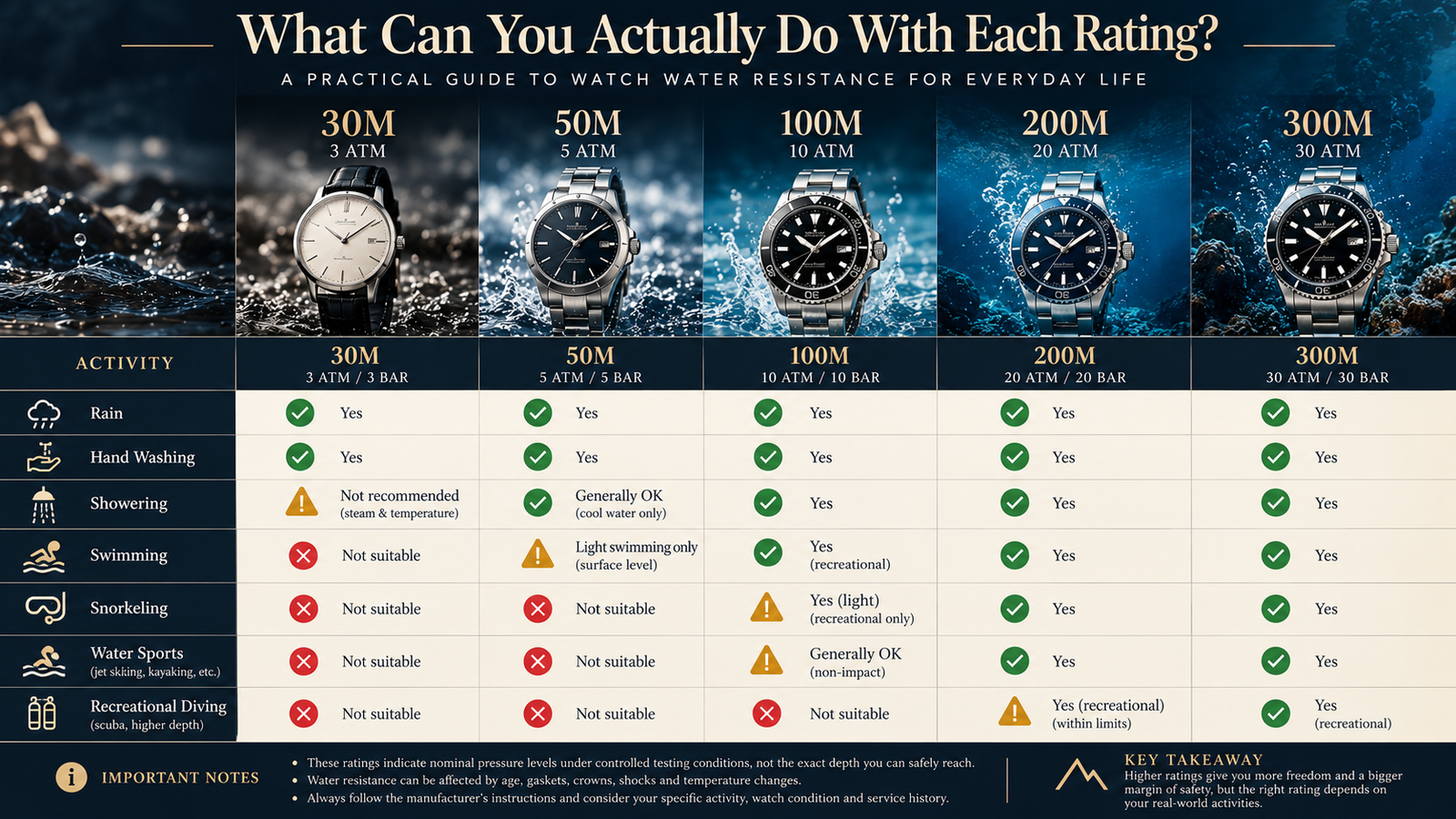
Rain and Hand Washing
Ordinary splashes can be less demanding than prolonged immersion, but a damaged watch or unsecured crown may still allow water inside.
Showering and Hot Water
Hot water, steam, detergents and temperature changes may negatively affect seals or materials on some watches.
Avoid showers and saunas unless your specific manufacturer explicitly permits that use.
Swimming and Snorkeling
Choose watches with relevant tested specifications and clear manufacturer guidance.
Snorkeling and water sports may involve different pressures and movement compared with ordinary swimming.
Scuba Diving
Scuba diving requires equipment designed and tested for the intended conditions.
A simple 200M marking is not by itself proof of professional diving suitability.
6. Why Watch Water Resistance Testing Matters
A watch can look impressive and still have unverified sealing performance.
Watchmakers use specialized pressure-testing equipment to assess whether water can enter the assembled watch case.
Depending on the method, testing may involve dry pressure, water pressure or controlled pressure changes.
What Should a Test Record Include?
- The watch or model tested.
- The test method.
- The applied pressure.
- The result.
- The testing date.
A general statement such as “waterproof tested” does not communicate as much as a specific, traceable pressure-test record.
Water Resistance on Replica or Aftermarket Watches
A watch resembling a familiar luxury diving design should not be assumed to share the genuine manufacturer’s complete water-resistance engineering or testing.
Replica and aftermarket watches should be evaluated using the actual specifications and testing evidence for the individual product.
For a broader overview of case condition, crowns, alignment and functional inspection, see our Luxury Watch QC Checklist: 10 Things to Check Before You Buy.
Do not wear a watch with unverified water resistance for swimming, snorkeling or diving merely because its appearance resembles a higher-rated sports watch.
7. How to Maintain Watch Water Resistance
Even when a watch has been pressure-tested, water resistance may change over time.
Gaskets age, crowns experience wear, and impacts or servicing may affect sealing performance.
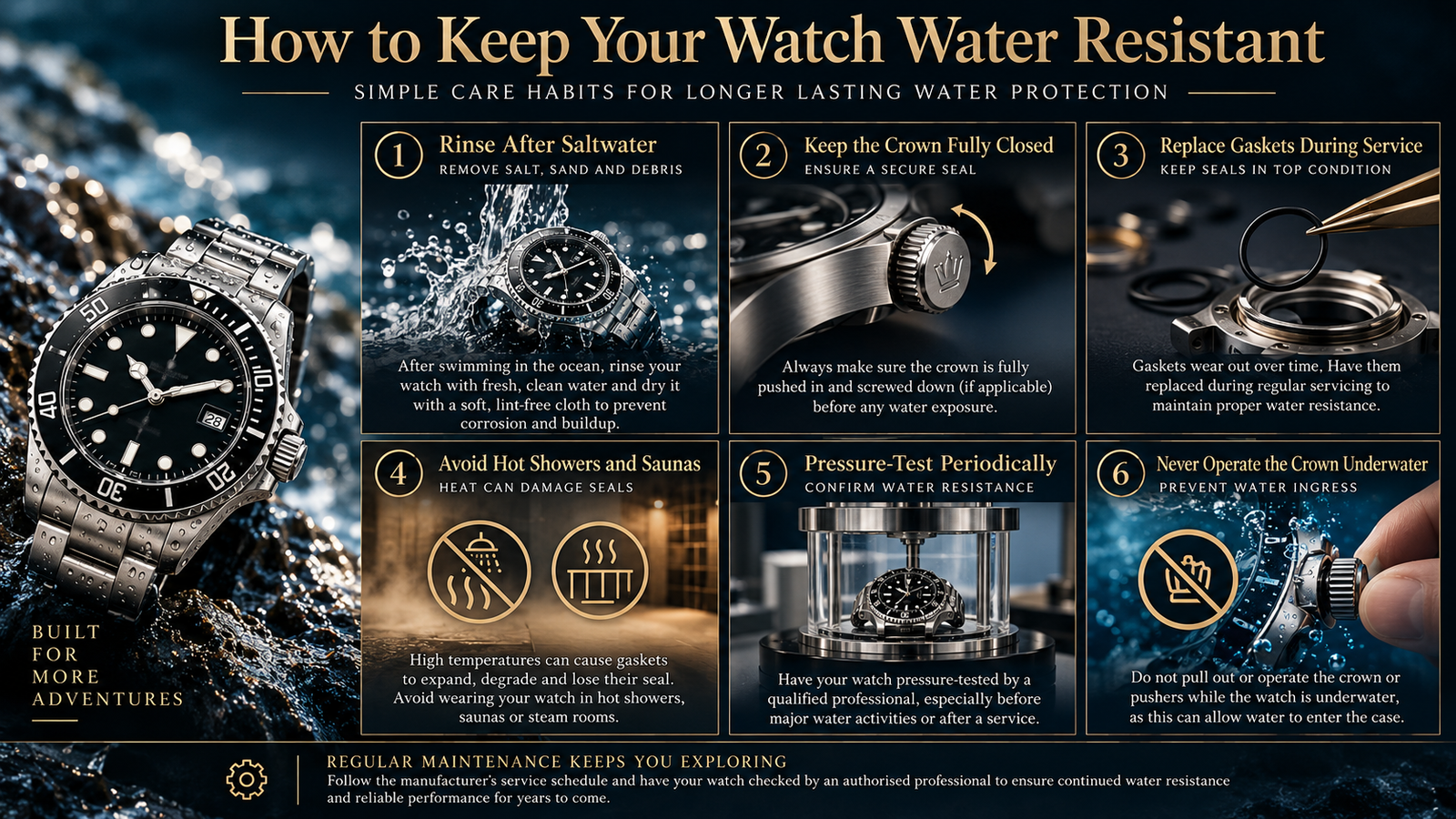
Keep the Crown Properly Closed
Ensure the crown is fully secured before any water exposure approved for the particular watch.
Do not operate the crown underwater unless the manufacturer expressly permits it.
Care After Saltwater Exposure
For watches approved for saltwater use, follow the manufacturer’s cleaning recommendations after exposure to the sea.
Never rinse an unverified watch under running water merely because the exterior looks water-resistant.
Replace Worn Gaskets
Sealing gaskets may need inspection or replacement as part of professional servicing.
If the case has been opened, consider an appropriate pressure test before exposing the watch to water again.
Follow a Suitable Service Schedule
Service requirements depend on the manufacturer, model and how the watch is used.
Casio’s official water-resistance care guidance offers useful examples of the precautions associated with different ratings.
8. Luxury Watch Water Resistance Buying Checklist
Before buying a watch that may be exposed to water, check the following details.
- Verify the water-resistance specification for the exact model.
- Check the manufacturer’s approved activities.
- Ask whether the watch has passed a pressure test.
- Request test documentation when available.
- Inspect the crown and visible case condition.
- Ask about prior repairs or case opening.
- Confirm whether sealing gaskets have been inspected.
- Avoid water exposure if resistance remains unverified.
Buyers should also review general condition, movement functions and bracelet quality. Our watch quality control guide provides a more complete pre-purchase checklist.
9. Frequently Asked Questions About Watch Water Resistance
Does 30M water resistance mean I can dive 30 metres?
No. The marking indicates a nominal pressure level, not unrestricted diving permission at that depth.
Can a 50M watch be used for swimming?
Some tested models are approved for shallow swimming, while others have more restrictive instructions. Follow the manufacturer’s guidance for the exact watch.
Is 100M water resistance suitable for swimming?
A properly tested and maintained 100M watch is commonly suitable for swimming when the manufacturer allows it.
Is 200M automatically suitable for scuba diving?
No. A 200M marking by itself does not establish all the additional requirements for scuba-diving watches.
Does a screw-down crown guarantee water resistance?
No. It is one component of the complete sealing system. The full case must be properly assembled and tested.
Can water resistance decrease with age?
Yes. Sealing components can wear or deteriorate, while servicing or impacts may affect case integrity.
Should a watch be tested after servicing?
Pressure testing is advisable after work affecting the case seals, particularly before renewed water exposure.
Do replica watches have the same water resistance as genuine models?
That cannot be assumed. A similar appearance does not establish equivalent engineering or testing. Each watch requires its own reliable evidence.
Choose Verified Performance, Not Just a Number.
This luxury watch water resistance guide highlights an important lesson: a water-resistance marking is useful, but it must be interpreted alongside manufacturer guidance, test evidence, maintenance and the condition of the individual watch.
Whether you are shopping for an everyday watch, a sports watch or a purpose-built diving model, accurate specifications are more valuable than assumptions based on appearance.
Continue exploring the Select Luxury Watches buying guides for practical advice on sizing, materials, movement features and quality inspection.
Technical References
This article is intended as a practical consumer guide. For technical requirements and model-specific usage, consult the following external resources.
ISO 22810:2010 — Horology: Water-resistant Watches