Luxury Watch QC Checklist: 10 Things to Check Before You Buy
A proper luxury watch QC checklist can help you identify alignment issues, finishing problems, functional faults and visible damage before a watch is shipped. Whether you are comparing models or reviewing a specific watch before delivery, these ten checks provide a practical framework for examining the details that matter most.
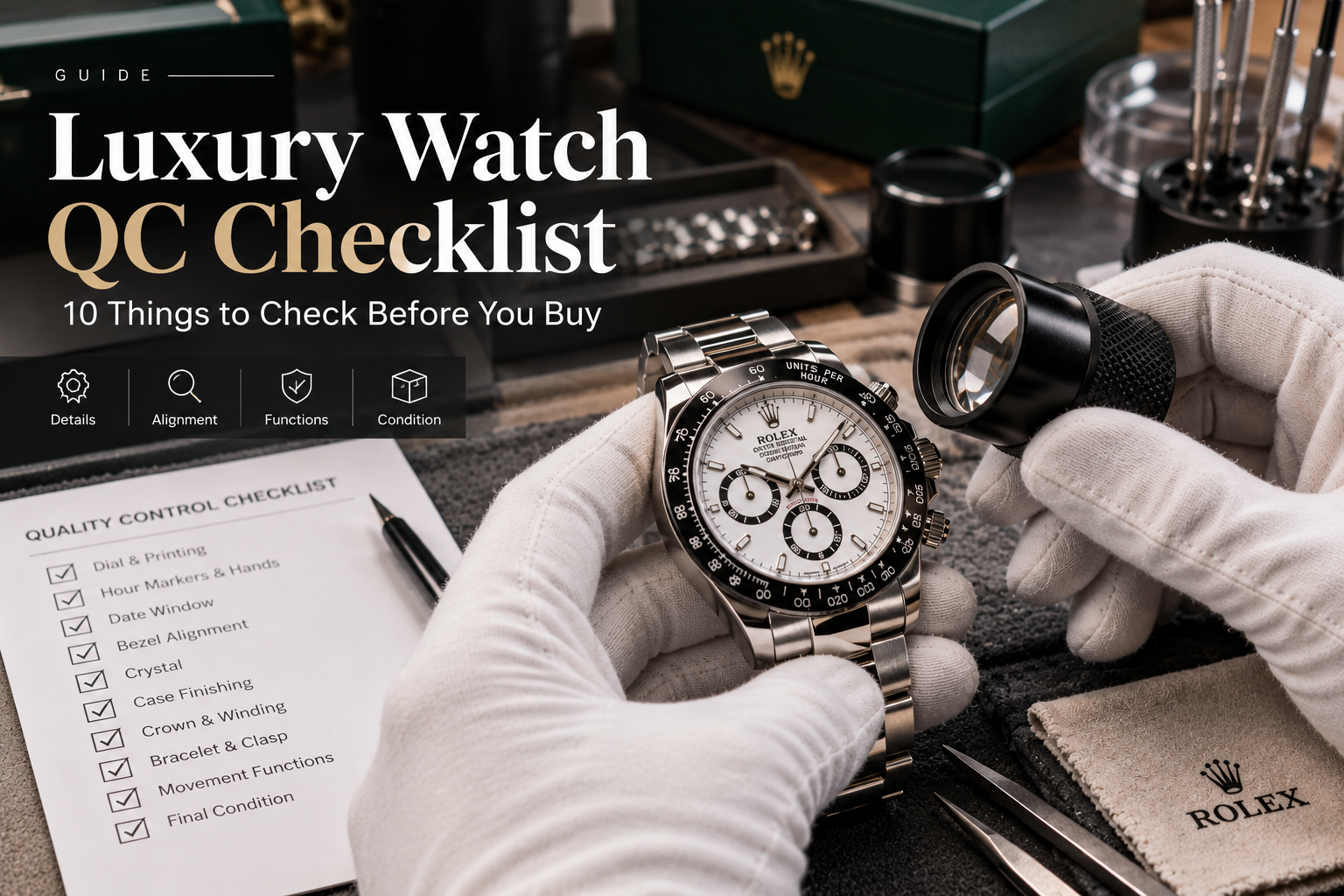
Choosing the right watch starts before the QC stage. If you are still comparing models, movements or specifications, read our How to Choose a Luxury Watch guide first. Once you have selected a model, the following luxury watch QC checklist can help you review the watch in a more systematic way.
Why a Luxury Watch QC Checklist Matters
Watches contain many small components, and even a minor assembly or alignment issue can become noticeable once you inspect the watch closely. A detailed luxury watch QC checklist helps you separate visual details from functional checks so that nothing important is missed.
QC is particularly useful when you want to compare two versions of the same model. Dial alignment, bezel positioning, bracelet fit and crown operation may all affect the overall impression of the watch.
1. Check the Dial Printing and Alignment
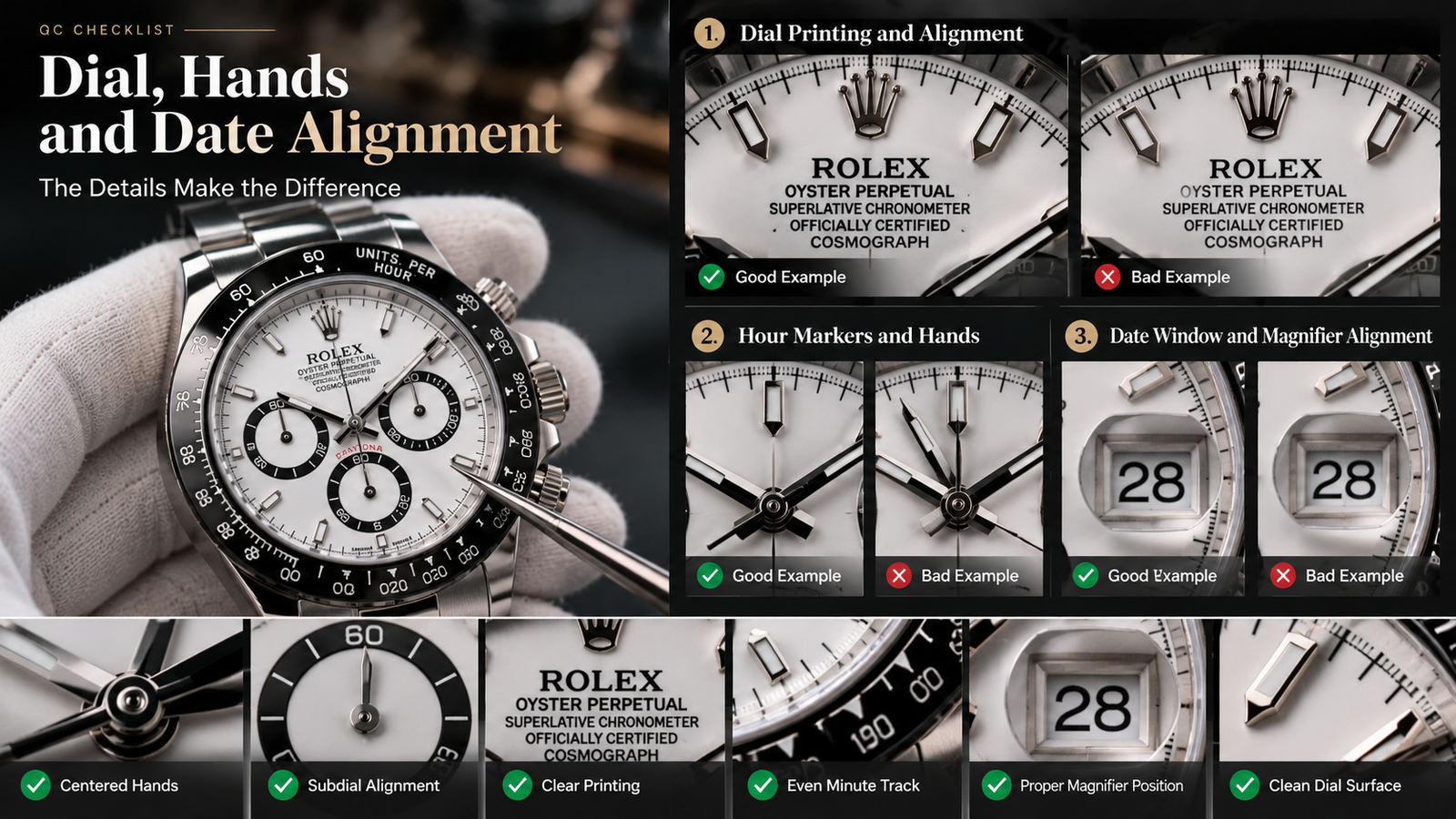
The dial is one of the first areas to inspect because small alignment problems are easy to notice once you know what to look for.
- Check whether the logo and text appear centered.
- Inspect the minute track around the outer edge of the dial.
- Look for uneven spacing between printed lines.
- Check that the dial itself appears centered inside the case.
- Look for dust, marks or printing defects.
2. Inspect the Hour Markers and Hands
Hour markers should appear evenly positioned around the dial. Pay particular attention to markers at 3, 6, 9 and 12 o’clock because alignment problems in these positions are usually easier to notice.
The hands should also sit correctly on the center pinion and move without visibly touching one another.
3. Check the Date Window and Magnifier Alignment
If the watch includes a date display, check whether the numeral sits evenly inside the date window. The number should not appear noticeably too high, too low or shifted to one side.
Watches with a magnifying lens should also be checked from directly above. The lens should visually align with the date window rather than sitting noticeably off-center.
4. Review the Bezel Alignment and Rotation
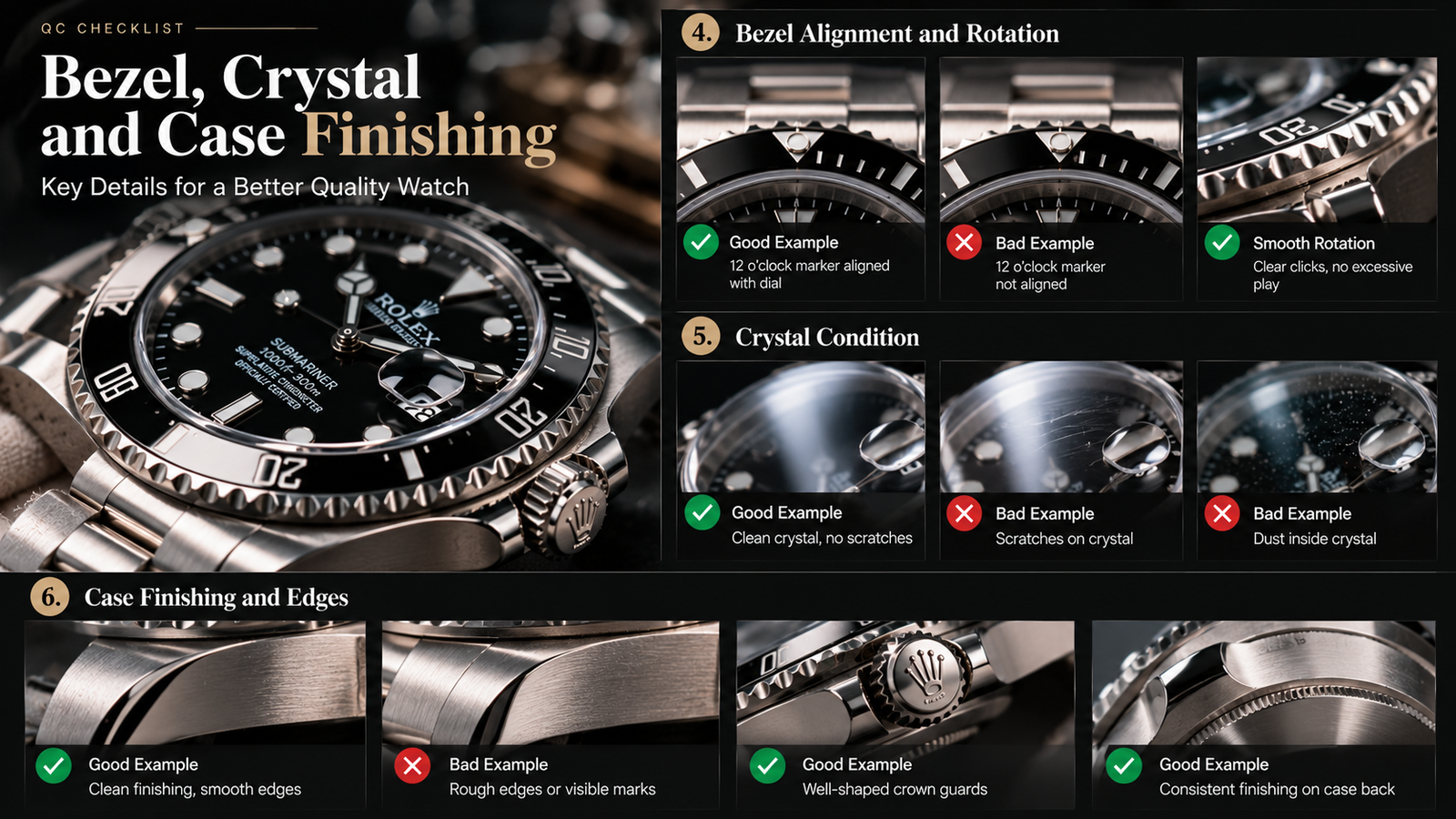
On watches with a rotating bezel, start by checking whether the 12 o’clock bezel marker aligns visually with the 12 o’clock dial marker.
Rotate the bezel and pay attention to the feel of each click. It should move consistently without excessive looseness or unusual resistance.
For GMT-style watches, also inspect the 24-hour numerals and the positioning of the triangle marker.
5. Inspect the Crystal
View the crystal under different lighting conditions. Reflections can hide small scratches or marks, so it is useful to tilt the watch slowly under direct light.
6. Check the Case Finishing and Edges
A watch case often combines brushed and polished surfaces. Check whether these finishes appear consistent and whether the transitions between them look clean.
Inspect the lugs, crown guards and case back for unusually rough edges, scratches or visible machining marks.
7. Test the Crown, Winding and Time Setting
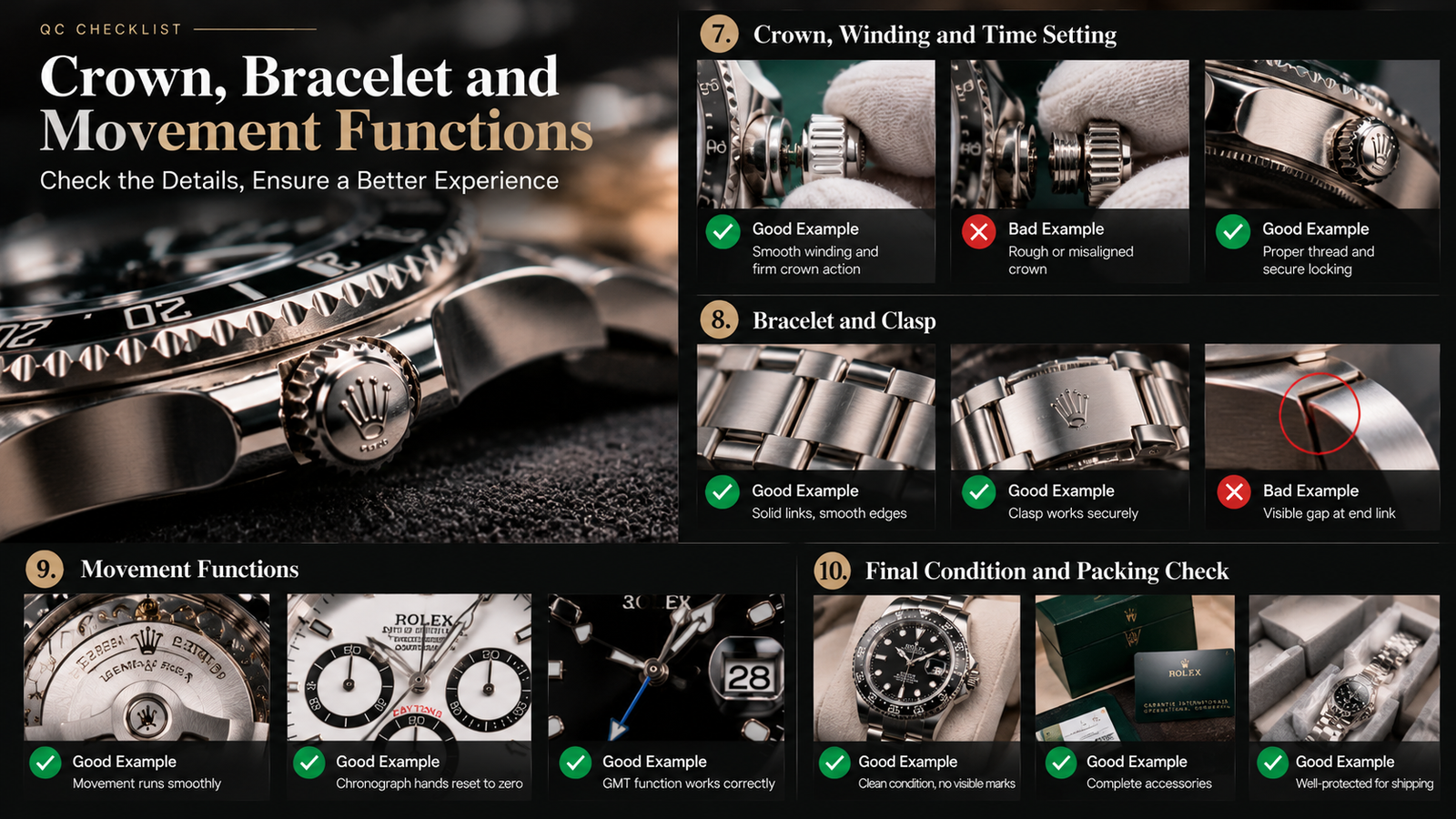
The crown connects the wearer directly to the movement, making it an important functional part of any luxury watch QC checklist.
Test manual winding, time setting and the date-setting position where applicable. If the watch uses a screw-down crown, check whether it engages smoothly with the crown tube.
Avoid forcing a crown that feels unusually tight or rough.
If you want a better understanding of automatic, manual and quartz calibers, see our Luxury Watch Movement Guide .
8. Inspect the Bracelet and Clasp
Bracelet quality affects both comfort and the way the watch feels on the wrist.
- Check link movement and articulation.
- Inspect screws or pins.
- Check for sharp or rough edges.
- Open and close the clasp several times.
- Check how the end links meet the case.
The clasp should lock securely without requiring excessive force.
9. Test the Movement Functions
Functional QC depends on the type of watch being inspected.
Standard Three-Hand Watches
Check time setting, winding, seconds movement and date change where applicable.
GMT Watches
Check the GMT hand, 24-hour indication, date change and the available local-hour adjustment.
Chronograph Watches
Test start, stop and reset functions. After resetting, the chronograph hands should return close to their intended zero positions.
For additional information about chronometer testing and movement accuracy standards, visit the Official Swiss Chronometer Testing Institute (COSC) .
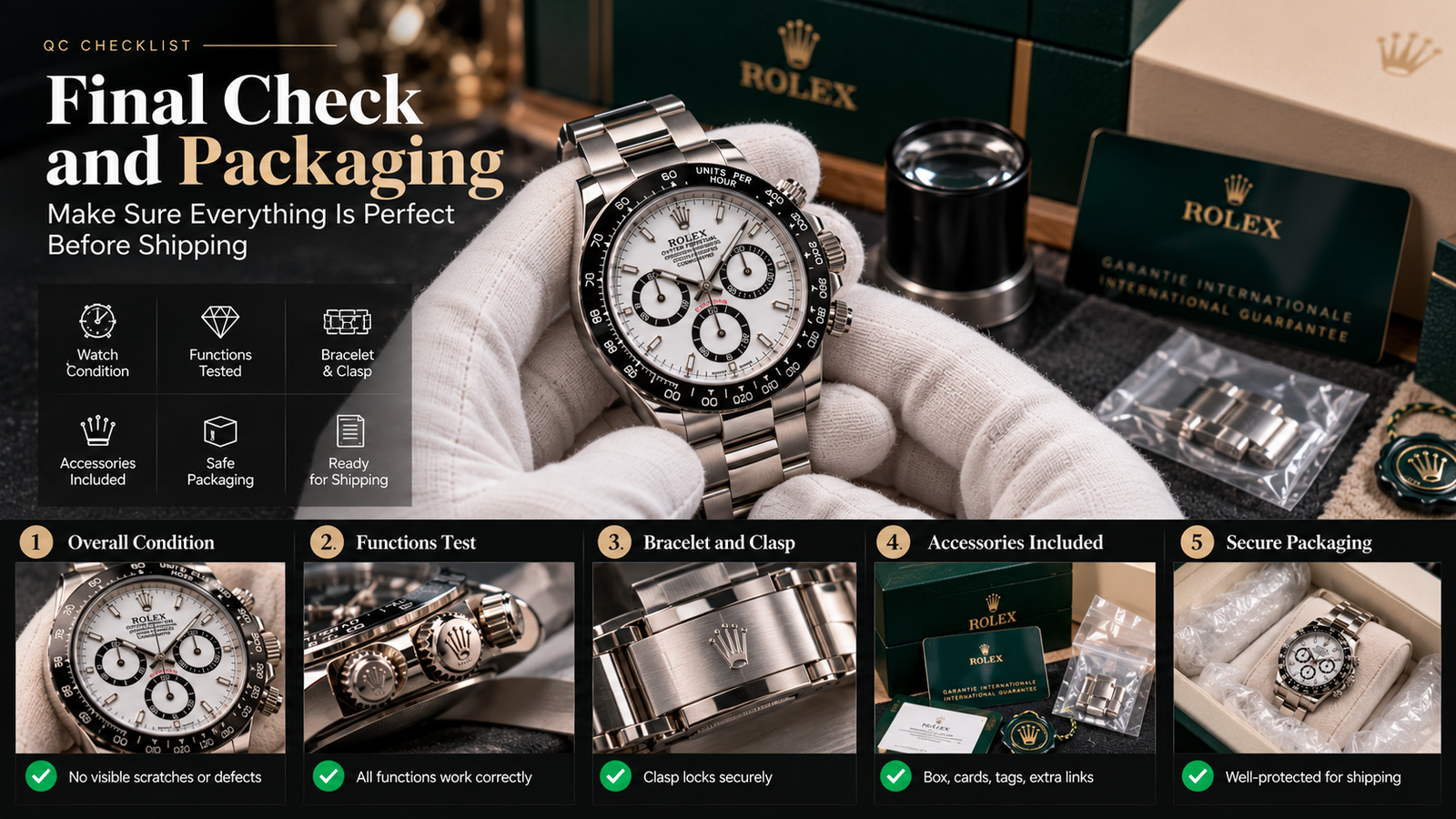
10. Complete a Final Condition and Packing Check
The final stage of the luxury watch QC checklist is a complete review of the watch immediately before packing.
Recheck the case, crystal, bracelet, clasp and visible dial condition. Confirm that the tested functions still operate correctly and that any included accessories are present.
The watch should then be secured so that the bracelet, case and crystal are protected during transport.
Quick Luxury Watch QC Checklist
The following table gives you a shorter luxury watch QC checklist for situations where you need to review a watch quickly.
| Area | Main QC Points |
|---|---|
| Dial | Printing, alignment, spacing and surface condition |
| Hands & Markers | Positioning, centering and even placement |
| Date | Numeral centering and magnifier alignment |
| Bezel | 12 o’clock alignment, clicks and rotation |
| Crystal | Scratches, chips, dust and installation |
| Case | Polishing, brushing, edges and lug finishing |
| Crown | Winding, setting and threading |
| Bracelet | Links, clasp, edges and end-link fit |
| Movement | Time, date, GMT or chronograph functions |
| Final Check | Condition, accessories and secure packaging |
Common QC Issues Buyers Should Watch For
Some problems occur more frequently than others. During inspection, pay additional attention to:
- Crooked or uneven hour markers
- Off-center date numerals
- Bezel markers that do not align correctly
- Chronograph hands that fail to reset correctly
- Loose bracelet links
- Sharp bracelet edges
- Scratches on polished surfaces
- Rough crown threading
- Dust beneath the crystal
- Uneven clasp operation
How QC Changes Between Different Watch Types
Not every watch requires exactly the same QC process.
A Datejust places more emphasis on the date window, magnifier, dial and bracelet.A Submariner adds bezel rotation and crown operation to the inspection.
A GMT-Master II requires additional checks of the GMT hand and 24-hour indication, while a Daytona requires chronograph start, stop and reset testing.
This is why a product-specific QC process is generally more useful than applying exactly the same checks to every watch.
Wrist fit is another consideration that should be checked separately. See our Luxury Watch Size Guide for more information about case diameter, lug-to-lug length and thickness.
Final Thoughts
A good luxury watch QC checklist does not need to be complicated. Concentrate on five main areas: alignment, finishing, functions, bracelet quality and overall condition.
Clear photos and videos can make these checks easier because they allow you to review small details before the watch is shipped. Product-specific specifications should always be used together with visual QC when comparing different models or versions.
Luxury Watch QC Checklist FAQ
What should I check first during luxury watch QC?
Start with the dial, hour markers, hands and date window. These areas are easy to inspect visually and can reveal alignment problems quickly.
Should every function be tested before shipping?
Yes. Test every function that is included in the specific watch, including the date, GMT indication or chronograph functions where applicable.
Why is bezel alignment important?
The bezel is a highly visible part of the watch. On models with a rotating bezel, the 12 o’clock marker should visually align with the dial and the rotation should feel consistent.
Should the bracelet be part of a luxury watch QC checklist?
Yes. Check link movement, clasp operation, end-link fit and whether any edges feel unusually sharp or rough.
Can visual QC confirm water resistance?
No. Visual inspection cannot verify water resistance. A proper pressure test is required if a specific water-resistance level needs to be confirmed.
More Luxury Watch Guides
Explore more practical guides covering sizing, movements, ownership and buying considerations.
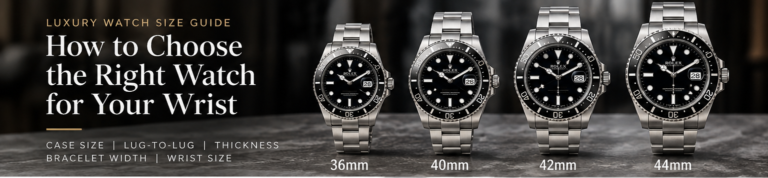
Luxury Watch Size Guide: How to Choose the Right Watch for Your Wrist
LUXURY WATCH GUIDES A good luxury watch size guide should help you understand much more than case diameter.…
Read Guide →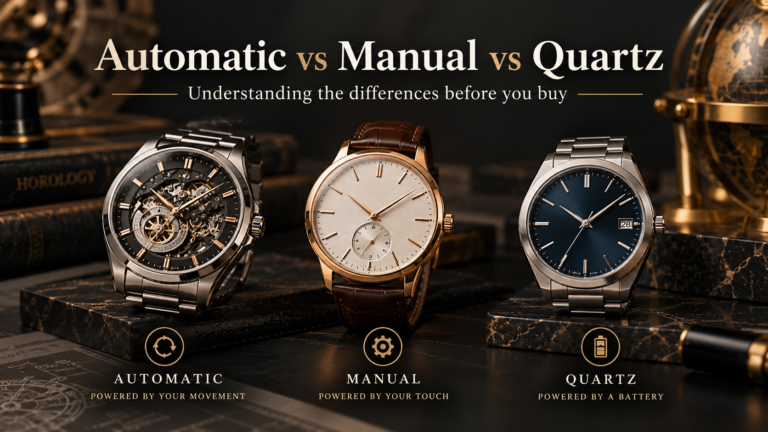
Luxury Watch Movement Guide: Automatic vs Manual vs Quartz
LUXURY WATCH GUIDES This luxury watch movement guide explains the key differences between automatic, manual-winding and quartz movements,…
Read Guide →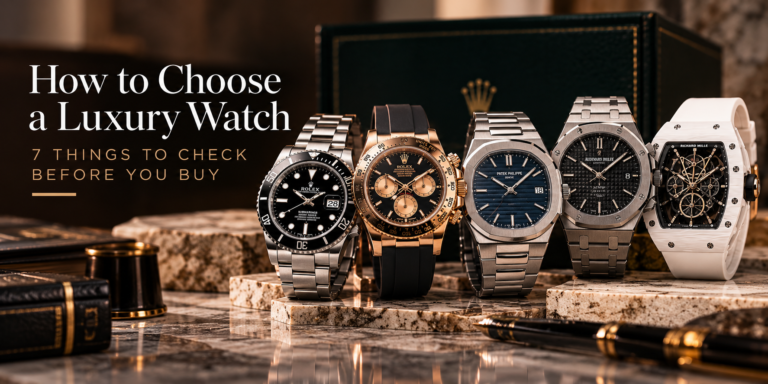
How to Choose a Luxury Watch: 7 Things to Check Before You Buy
LUXURY WATCH GUIDES How to choose a luxury watch starts with understanding much more than appearance alone. Case…
Read Guide →