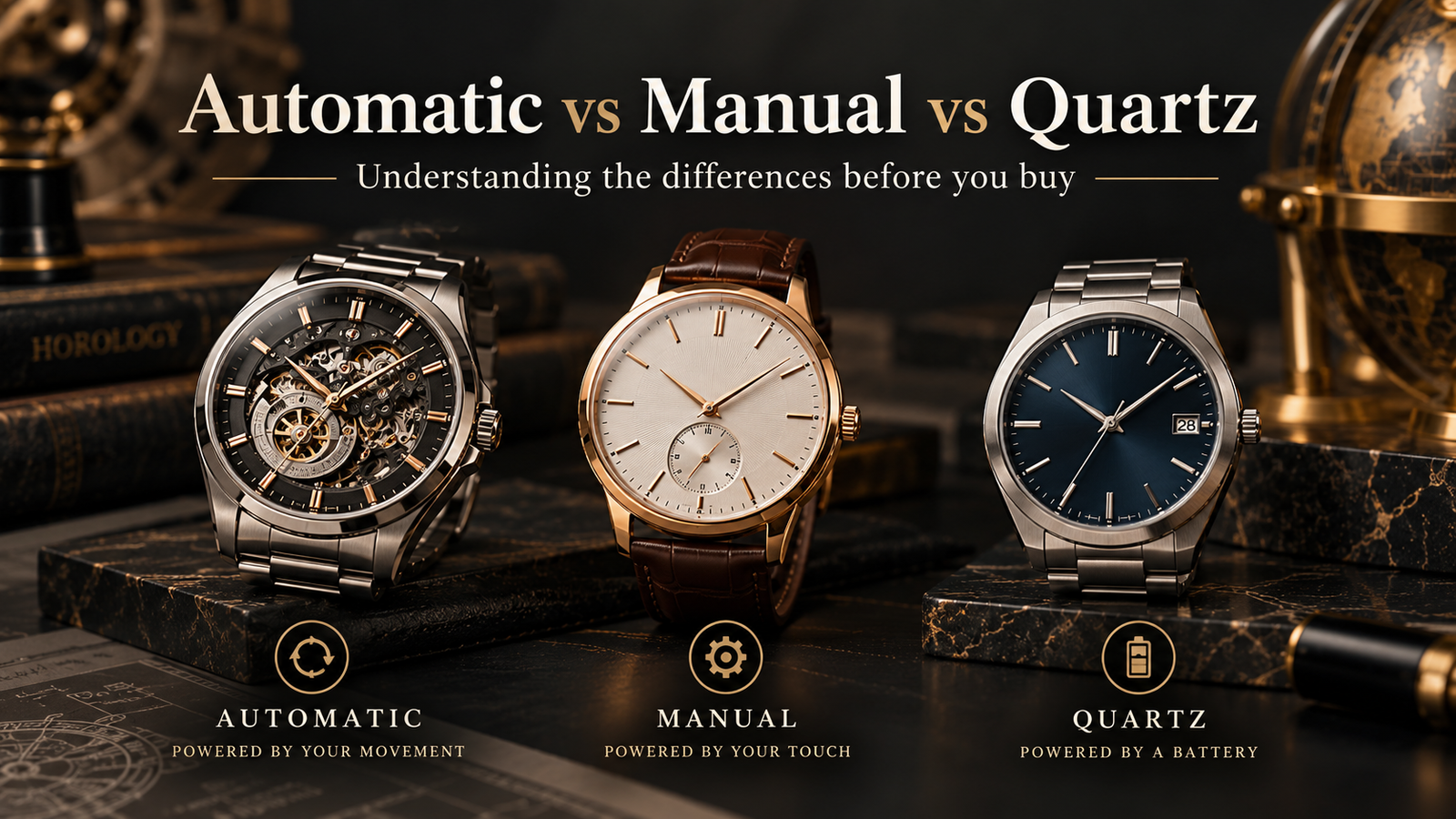
This luxury watch movement guide explains the key differences between automatic, manual-winding and quartz movements, including how they are powered, how accurate they are, how much maintenance they require and which type may suit your lifestyle best.
1. What Is a Watch Movement?
The movement is the mechanism inside a watch that keeps time and controls functions such as the hour, minute and second hands.
Different movements use different energy sources. Mechanical watches rely on a wound mainspring, while quartz watches use electrical energy from a battery.
The three most common categories are:
- Automatic mechanical movements
- Manual-winding mechanical movements
- Quartz movements
Understanding these differences is an important part of any luxury watch movement guide because each system creates a different ownership experience.
2. Automatic Watch Movements
An automatic movement is a mechanical movement that winds itself through the natural motion of the wearer’s wrist.
Inside the movement is a weighted component called a rotor. As the wrist moves, the rotor rotates and transfers energy into the mainspring.
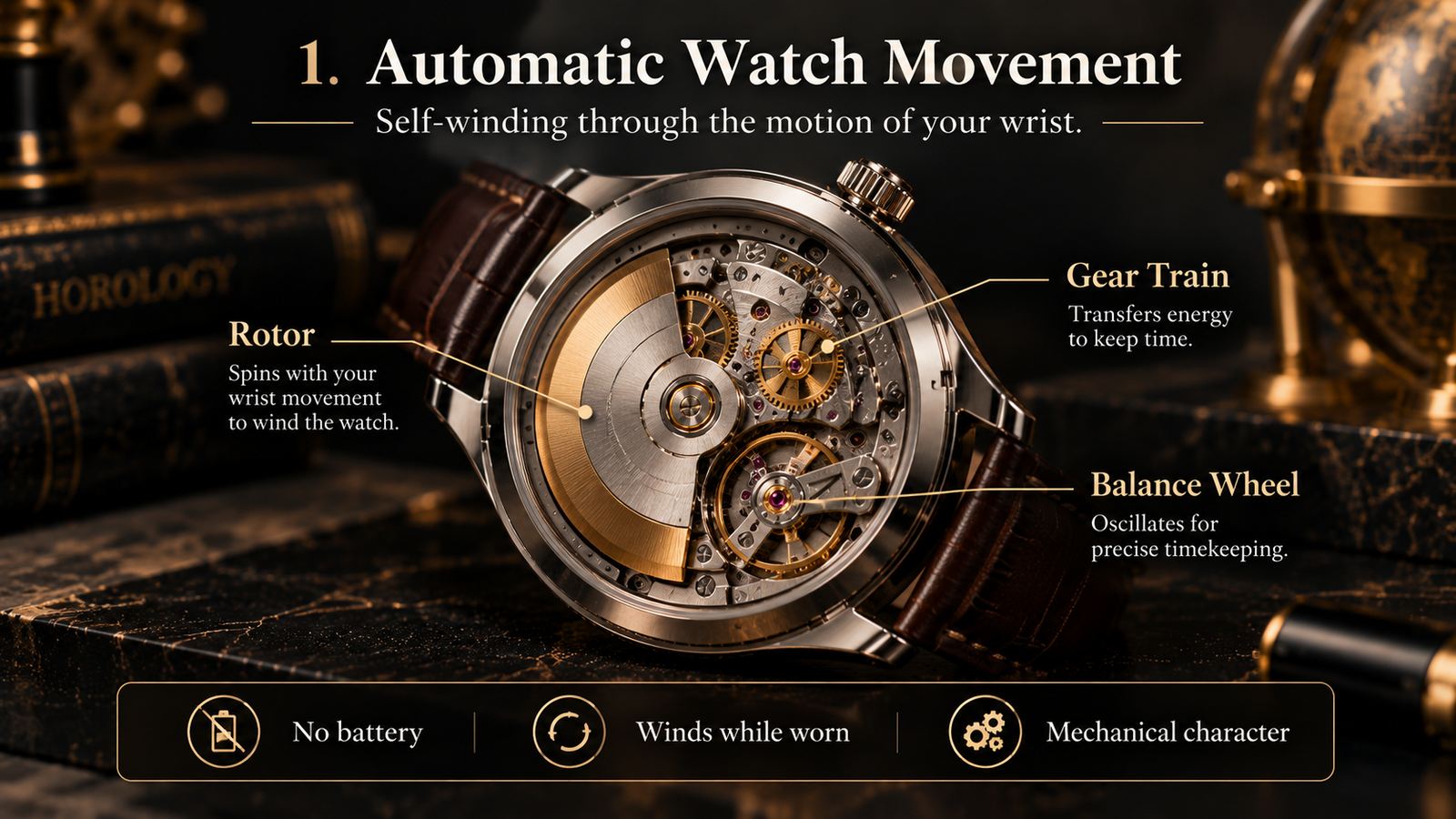
Common characteristics of automatic movements include:
- No battery required
- Self-winding while worn
- Mechanical construction
- Visible rotor on many display-caseback models
- Periodic servicing required
3. Manual-Winding Watch Movements
Manual-winding watches are also mechanical, but they do not use an automatic rotor to wind the mainspring.
Instead, the owner turns the crown by hand. This stores energy inside the mainspring, which gradually releases that energy through the movement.
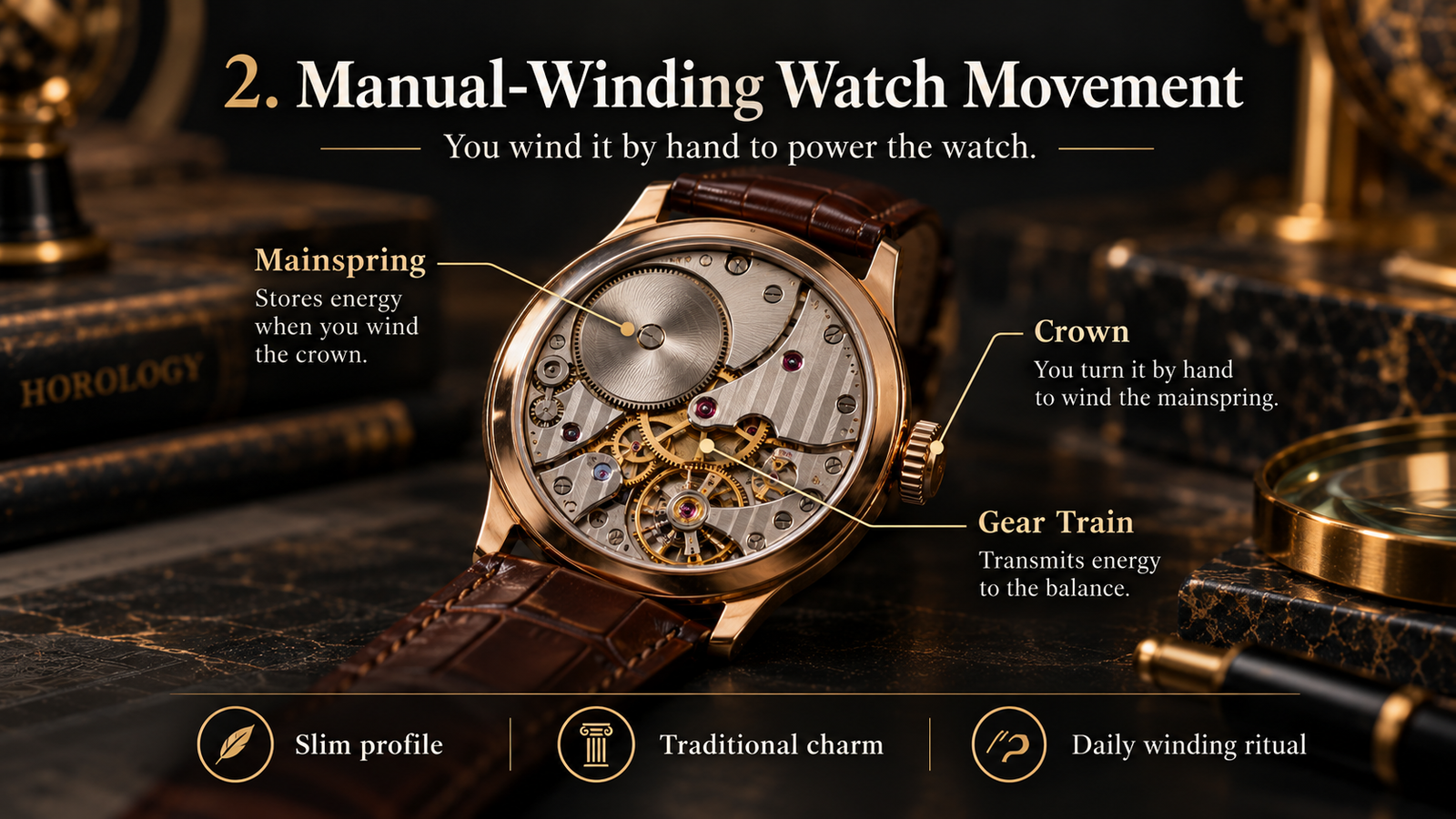
Many enthusiasts enjoy manual movements because winding the watch becomes part of the ownership experience.
The absence of an automatic rotor can also allow watchmakers to design thinner movements and provide a clearer view of the mechanical architecture through a display caseback.
4. Quartz Watch Movements
Quartz movements operate very differently from mechanical movements. They use electrical energy from a battery and regulate time through the vibration of a quartz crystal.
Because quartz crystals vibrate at a highly consistent frequency, quartz watches can provide excellent accuracy with relatively little maintenance.
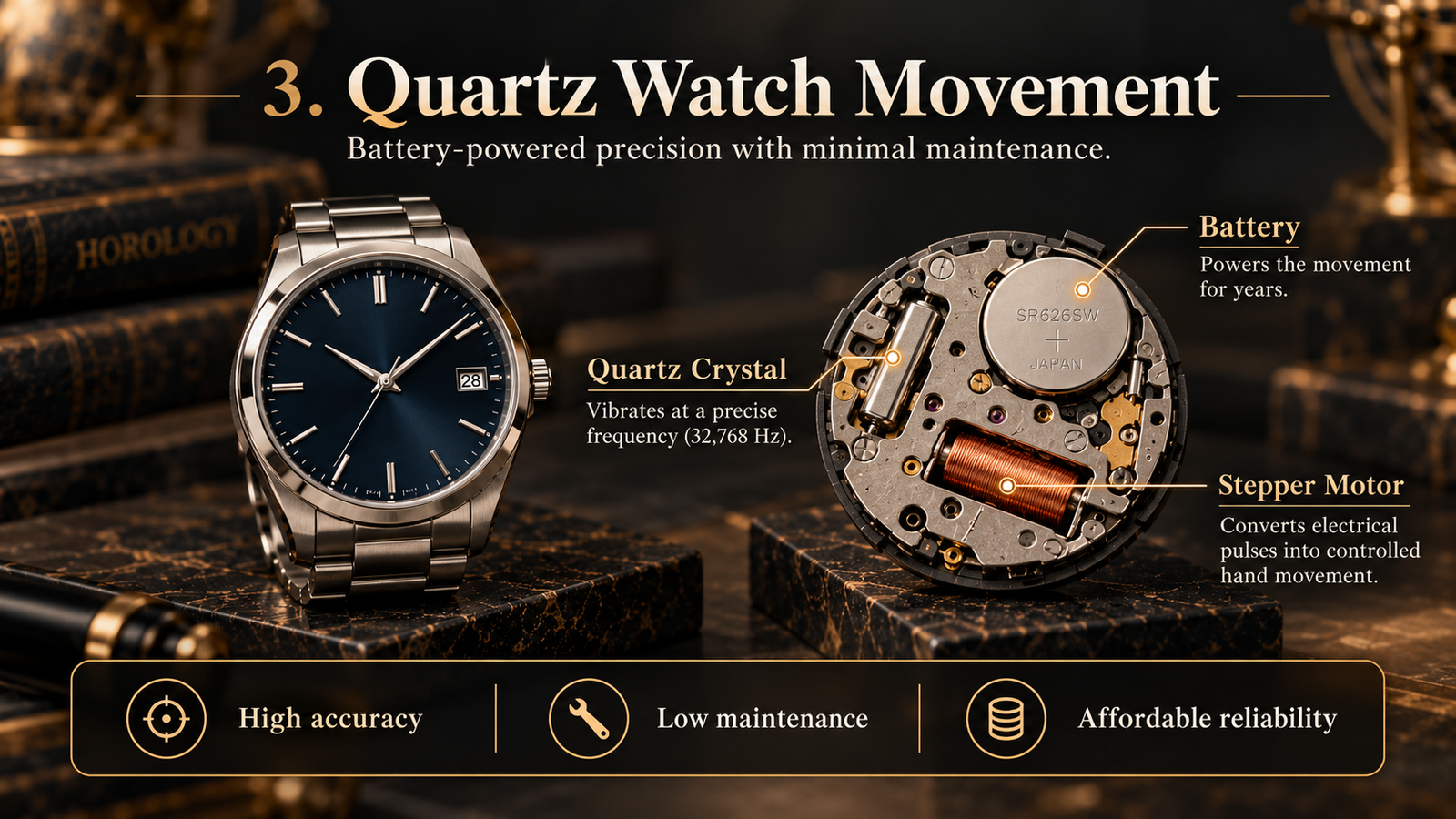
Quartz watches are often a good choice for buyers who value:
- High accuracy
- Low maintenance
- Simple everyday operation
- Long battery life
- Reliable performance
5. Automatic vs Manual vs Quartz
The right movement depends on what you expect from the watch. Each system has advantages and compromises.
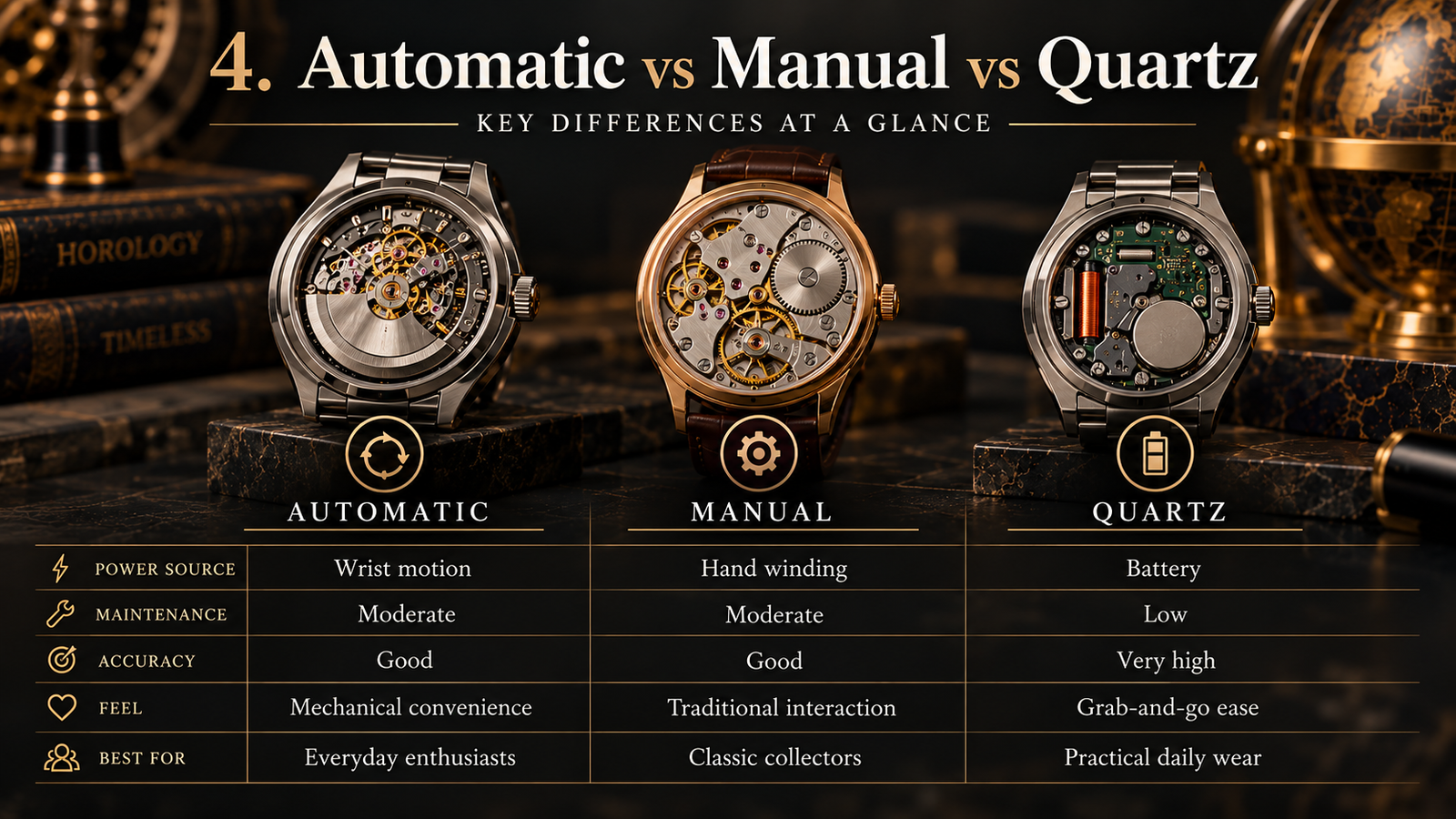
| Feature | Automatic | Manual | Quartz |
|---|---|---|---|
| Power Source | Wrist movement | Manual winding | Battery |
| Accuracy | Good | Good | Very high |
| Maintenance | Periodic servicing | Periodic servicing | Battery replacement |
| Interaction | Convenient mechanical | Hands-on mechanical | Minimal interaction |
| Best For | Everyday enthusiasts | Traditional collectors | Practical daily wear |
6. Accuracy and Power Reserve
Accuracy varies between individual movements and watches. Mechanical movements can gain or lose small amounts of time during normal operation, while quartz watches are generally much more accurate.
Mechanical watches also have a power reserve. This describes how long the movement can continue operating after it has been fully wound.
Many modern mechanical movements provide approximately 40 to 70 hours of power reserve, although the exact figure depends on the specific movement.
A useful luxury watch movement guide should also compare accuracy and power reserve because these two factors directly affect everyday ownership and how often the watch may need attention.
7. Maintenance and Servicing
Mechanical movements contain many moving components and lubricants, so periodic servicing is an important part of long-term ownership.
Quartz watches usually require less mechanical maintenance, although batteries eventually need replacement and seals may still require inspection.
Buyers researching a luxury watch movement guide should therefore consider not only the purchase price but also the long-term maintenance requirements.
8. Which Watch Movement Is Right for You?
When using a luxury watch movement guide to compare options, think about how much interaction, maintenance and accuracy you actually want from the watch.
Choose Automatic If…
You want traditional mechanical engineering with the convenience of self-winding during everyday wear.
Choose Manual If…
You enjoy interacting with the watch and appreciate a more traditional winding ritual.
Choose Quartz If…
Accuracy, low maintenance and simple everyday reliability are your main priorities.
Frequently Asked Questions
Is an automatic movement better than quartz?
Not necessarily. Automatic movements offer mechanical complexity and traditional watchmaking, while quartz movements generally provide greater accuracy and lower maintenance.
Does an automatic watch need a battery?
No. Traditional automatic mechanical watches store energy in a mainspring and are wound through the motion of the rotor.
Do manual watches need to be wound every day?
It depends on the power reserve. Some watches may require daily winding, while others can continue running for several days.
Which type of movement is the most accurate?
Standard quartz movements are generally more accurate than traditional mechanical movements.
Final Thoughts
A good luxury watch movement guide should help you understand more than technical specifications. Automatic movements offer mechanical convenience, manual movements create a more traditional experience, and quartz movements provide accuracy and simplicity. The best choice depends on how you plan to wear and maintain the watch.
More Luxury Watch Guides
Explore more practical guides covering sizing, movements, ownership and buying considerations.

Luxury Watch Size Guide: How to Choose the Right Watch for Your Wrist
LUXURY WATCH GUIDES A good luxury watch size guide should help you understand much more than case diameter.…
Read Guide →
How to Choose a Luxury Watch: 7 Things to Check Before You Buy
LUXURY WATCH GUIDES How to choose a luxury watch starts with understanding much more than appearance alone. Case…
Read Guide →Hello world!
Welcome to WordPress. This is your first post. Edit or delete it, then start writing!
Read Guide →