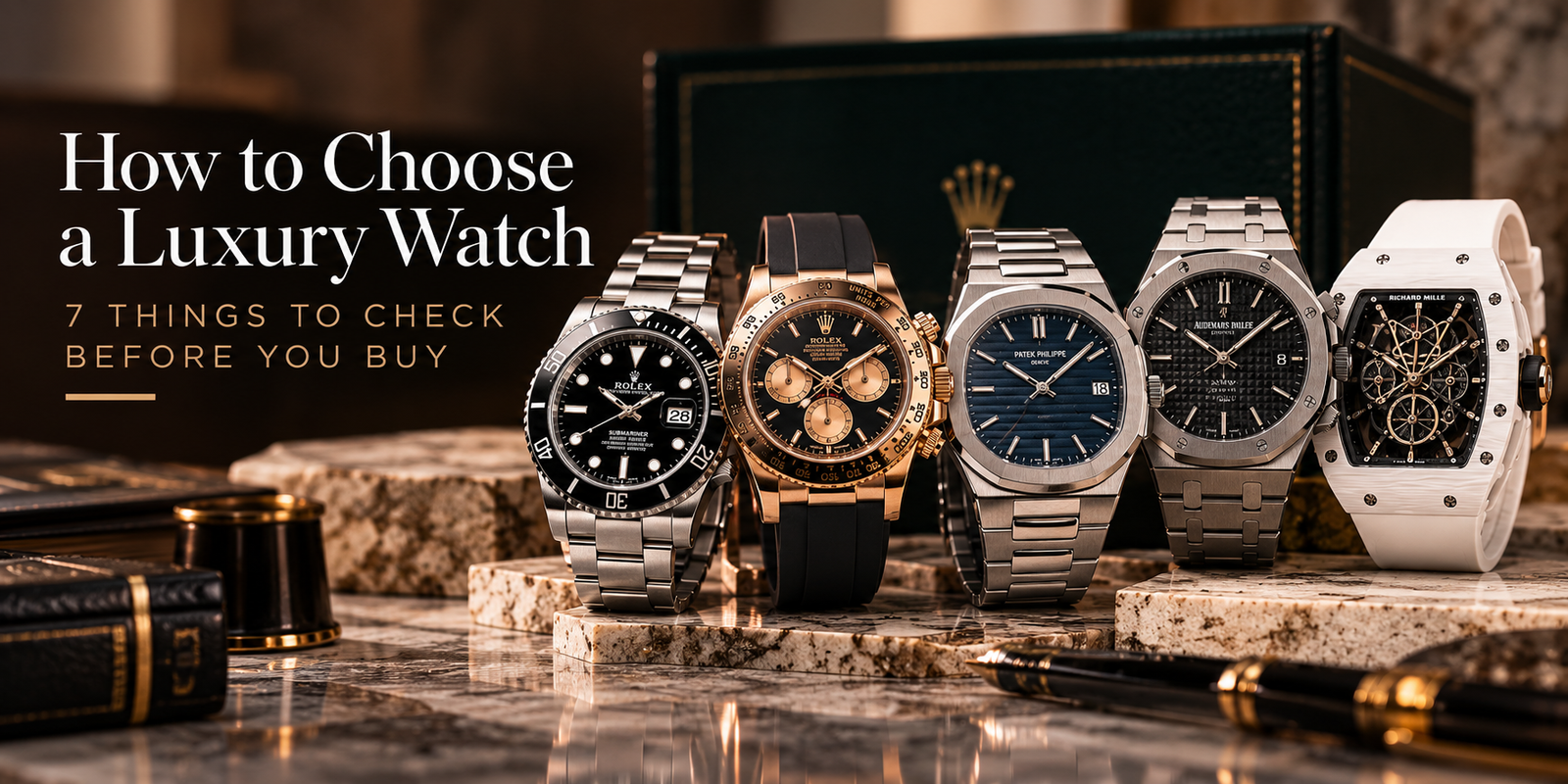
How to choose a luxury watch starts with understanding much more than appearance alone. Case size, movement, materials, finishing, comfort and condition can all influence how a watch looks, feels and performs once it reaches your wrist.
1. How to Choose a Luxury Watch With the Right Case Size
Case diameter is one of the first specifications buyers notice, but it does not tell the complete story. Two watches with the same diameter can wear very differently because of case shape, lug length, thickness and bracelet proportions.
When comparing watch sizes, pay attention to:
- Case diameter
- Lug-to-lug length
- Case thickness
- Bezel proportions
- Bracelet width
- Your wrist shape
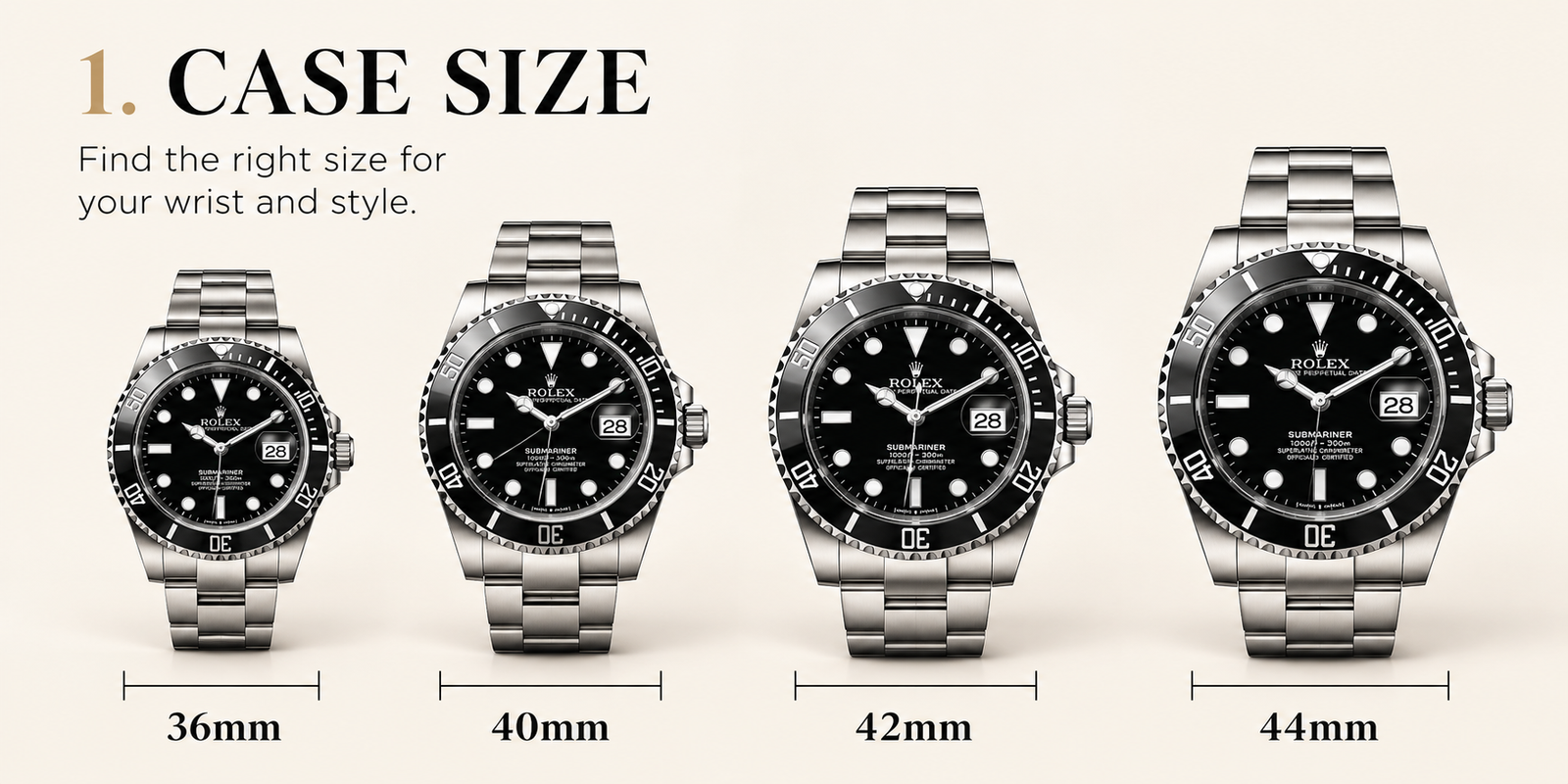
A compact 40mm watch can sometimes feel smaller than another 40mm model with longer lugs. This is why overall proportions are often more useful than relying on case diameter alone.
2. Understand the Movement
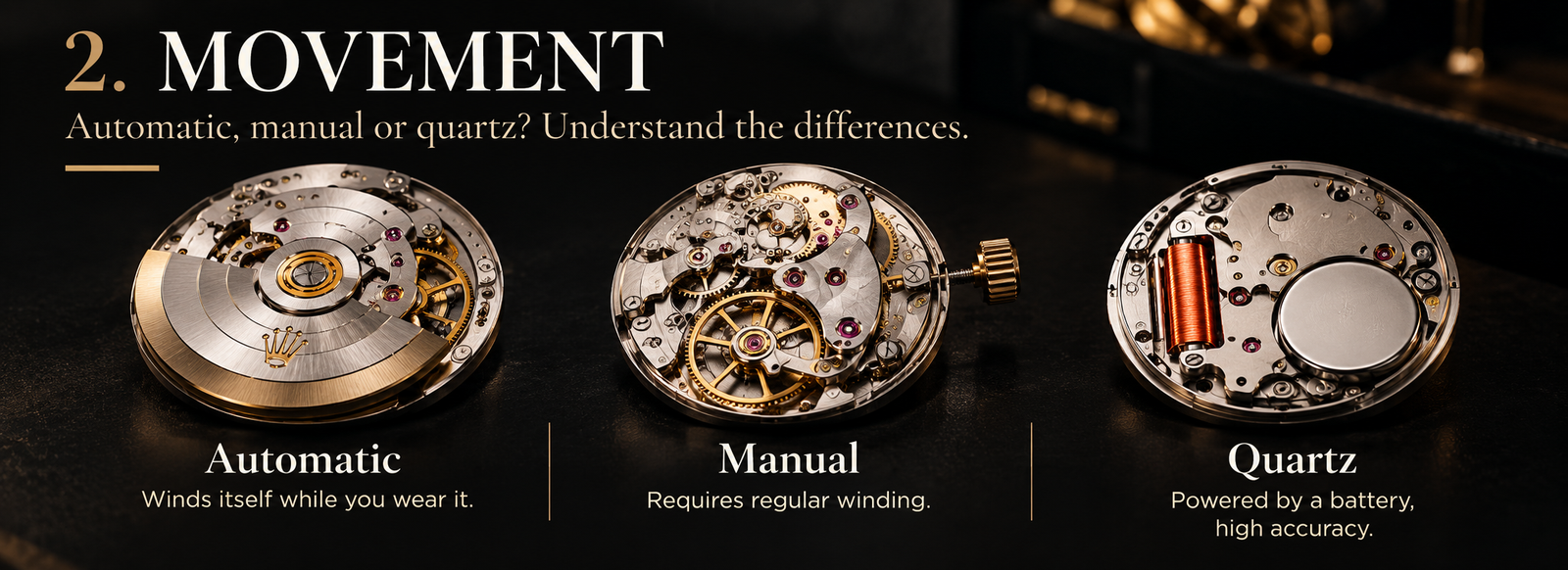
The movement is the mechanism that powers the watch. Luxury watches generally use automatic, manually wound or quartz movements.
Automatic mechanical movements wind through the natural movement of the wrist. Manual movements require regular winding, while quartz movements use a battery and are generally known for consistent accuracy.
Important movement specifications can include:
- Movement type
- Power reserve
- Beat rate
- Accuracy
- Service intervals
- Availability of replacement parts
For everyday ownership, reliability and ease of servicing can often be more valuable than complicated specifications that are rarely used.
Buyers interested in mechanical-watch accuracy can also learn about chronometer testing standards from COSC , the Official Swiss Chronometer Testing Institute.
3. Compare the Materials
The material used for the case and bracelet influences weight, appearance, scratch resistance and long-term comfort.
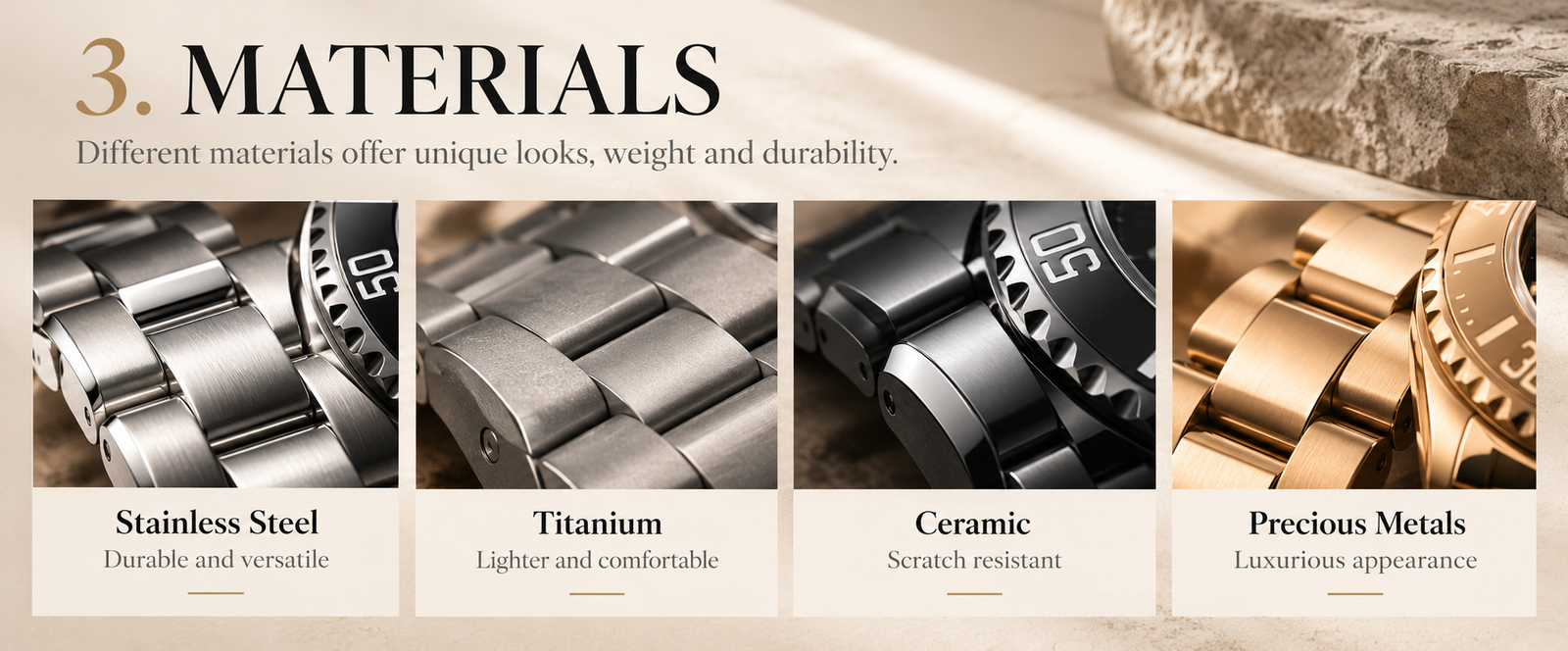
Stainless Steel
Durable, versatile and relatively easy to maintain. Steel remains one of the most common materials used for everyday luxury watches.
Titanium
Lighter than stainless steel and particularly useful for larger watches where overall weight can affect comfort.
Ceramic
Highly resistant to scratches and frequently used for bezels and other modern watch components.
Precious Metals
Gold and platinum provide greater weight and a distinctive appearance but generally require more care during regular use.
Bracelet construction is equally important. Links should articulate smoothly and the clasp should close securely without feeling excessively loose.
When learning how to choose a luxury watch, material selection should be considered together with weight, durability and long-term comfort.
4. Examine the Finishing
Learning how to choose a luxury watch also means paying attention to small finishing details. Good finishing should appear consistent across the case, bracelet, dial and smaller components.
Look closely at:
- Brushed surfaces
- Polished surfaces
- Case edges
- Dial printing
- Hour markers
- Hands
- Date-window alignment
- Bracelet finishing
Transitions between brushed and polished surfaces should look clean. Dial printing should appear sharp and properly aligned when viewed closely.
5. Think About Wrist Comfort
A visually impressive watch is not necessarily a comfortable watch. Weight, thickness and bracelet design all influence the experience of wearing a watch for several hours.
If you intend to wear the watch regularly, consider whether the case sits comfortably on the wrist and whether the bracelet offers enough adjustment.
Micro-adjustment systems can be particularly useful because wrist size can naturally change slightly throughout the day.
6. Check the Actual Condition
When purchasing a pre-owned or previously handled watch, clear photographs of the actual item are extremely important.
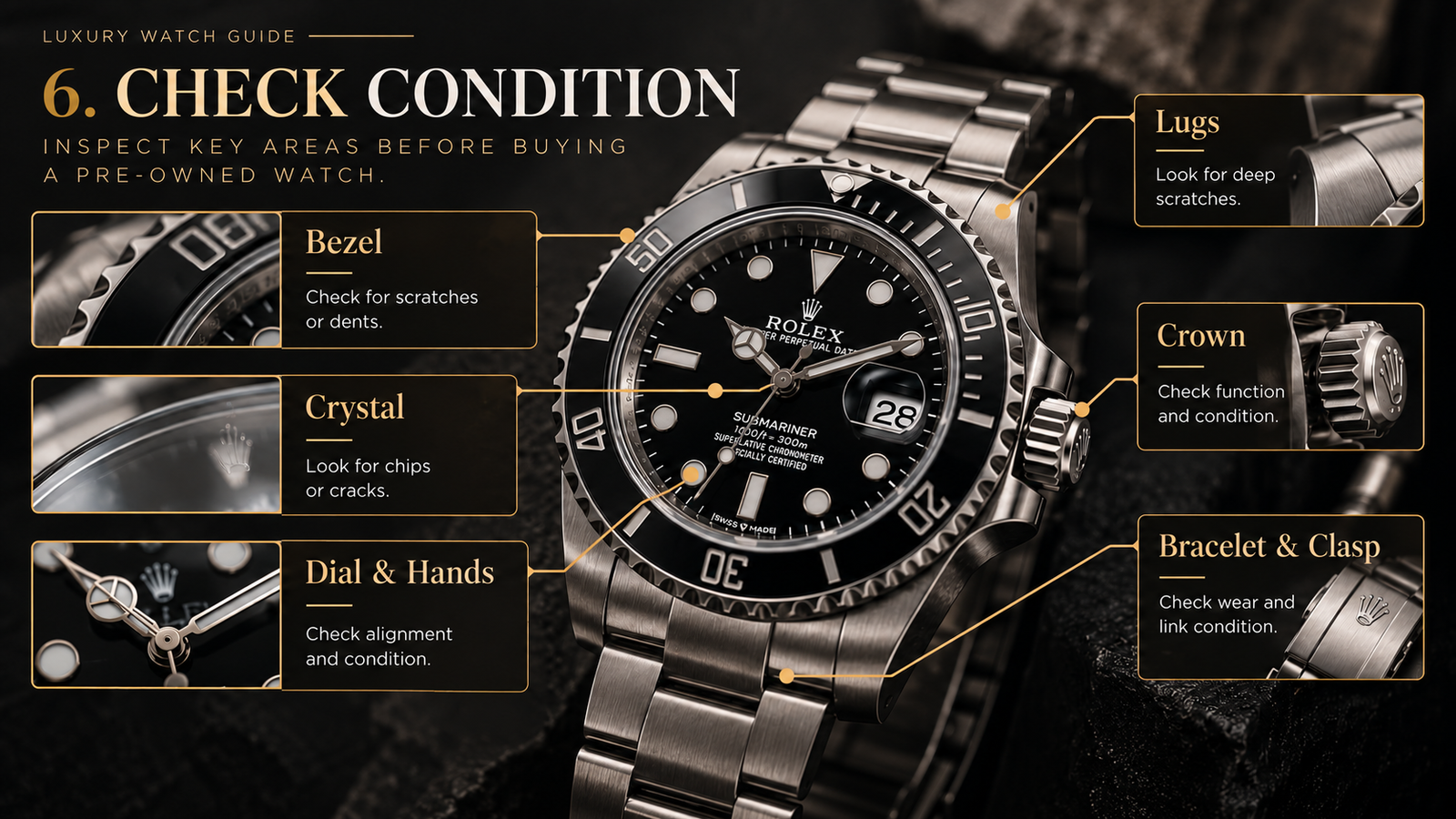
Condition Checklist
- Inspect the bezel for dents and scratches
- Check the crystal from several angles
- Examine both sides of the case
- Look carefully at the lugs
- Check bracelet links and clasp condition
- Inspect the crown and controls
- Ask about previous service or repair history
Minor surface scratches may be normal on a used watch. More important concerns include deep damage, excessive polishing, poorly fitted components or unclear repair history.
7. Evaluate the Seller as Carefully as the Watch
A good buying experience depends on more than the product itself. The seller should clearly explain what is being offered and provide enough information for you to make an informed decision.
Check whether the seller provides clear information about:
- Product condition
- Actual product photographs
- Inspection procedures
- Shipping process
- Payment options
- Return conditions
- Customer support
Be cautious when a listing makes claims that cannot be supported by documentation, photographs or clear product information.
Understanding how to choose a luxury watch also means evaluating the seller, product information and after-sales support before making a purchase.
Which Luxury Watch Is Right for You?
There is no single watch that is right for every buyer. Some people prefer compact dress watches, while others prefer larger sports models or simple steel watches for everyday use.
Where will I wear the watch?
Consider daily use, business settings, formal occasions or travel.
What size feels comfortable on my wrist?
Focus on overall proportions rather than following size trends.
Which features will I actually use?
A simple watch may suit your lifestyle better than one with
complications you rarely need.
Answering these questions can quickly narrow a large number of options into a much more manageable shortlist.
Frequently Asked Questions
What is the best watch size for everyday wear?
There is no universal size. Wrist dimensions, lug-to-lug length and case thickness are usually more important than diameter alone.
Is an automatic watch better than quartz?
Not necessarily. Automatic watches appeal to buyers who enjoy mechanical engineering, while quartz watches can offer excellent accuracy and simpler maintenance.
What should I check when buying a pre-owned watch?
Focus on condition, service history, clear photographs, movement performance, bracelet condition and seller transparency.
Final Thoughts
Understanding how to choose a luxury watch means comparing the right proportions, movement, materials, finishing, comfort, condition and seller transparency. Taking time to review these details before buying can lead to a much better ownership experience.
More Luxury Watch Guides
Explore more practical guides covering sizing, movements, ownership and buying considerations.
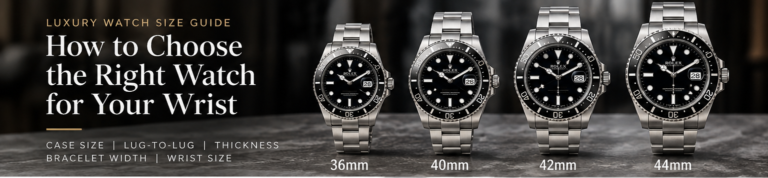
Luxury Watch Size Guide: How to Choose the Right Watch for Your Wrist
LUXURY WATCH GUIDES A good luxury watch size guide should help you understand much more than case diameter.…
Read Guide →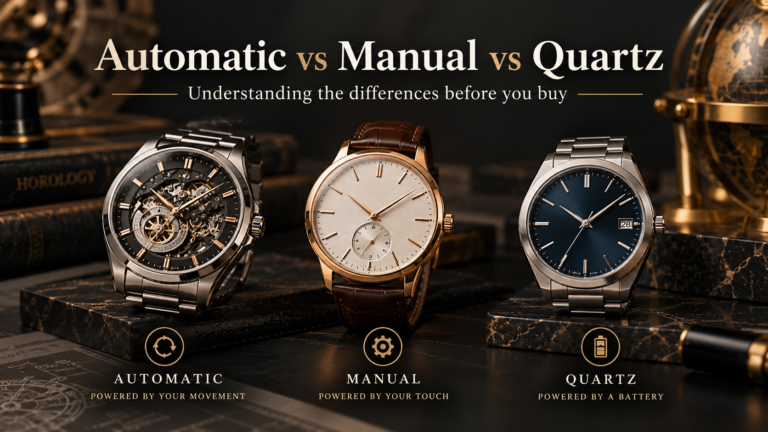
Luxury Watch Movement Guide: Automatic vs Manual vs Quartz
LUXURY WATCH GUIDES This luxury watch movement guide explains the key differences between automatic, manual-winding and quartz movements,…
Read Guide →Hello world!
Welcome to WordPress. This is your first post. Edit or delete it, then start writing!
Read Guide →